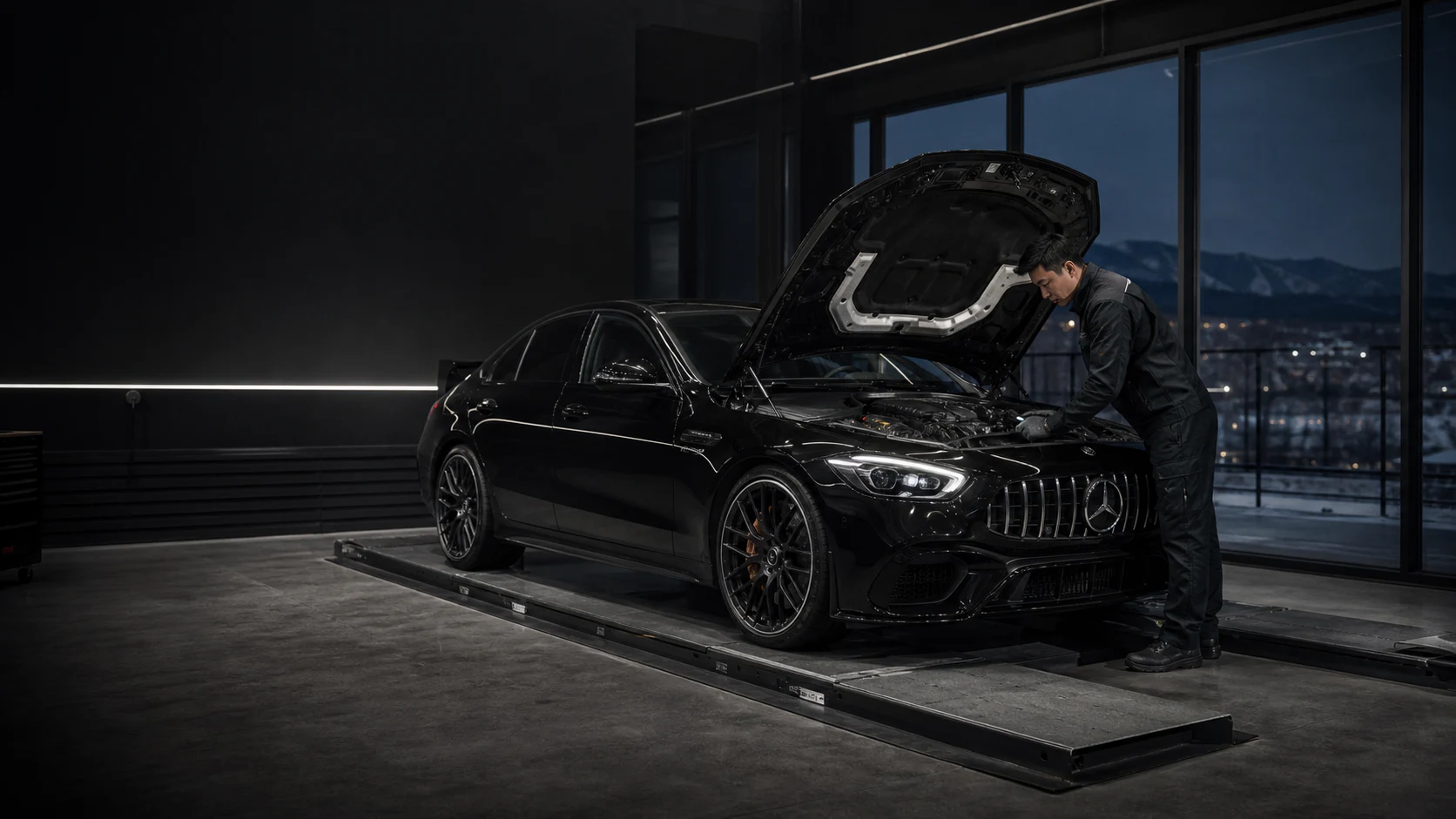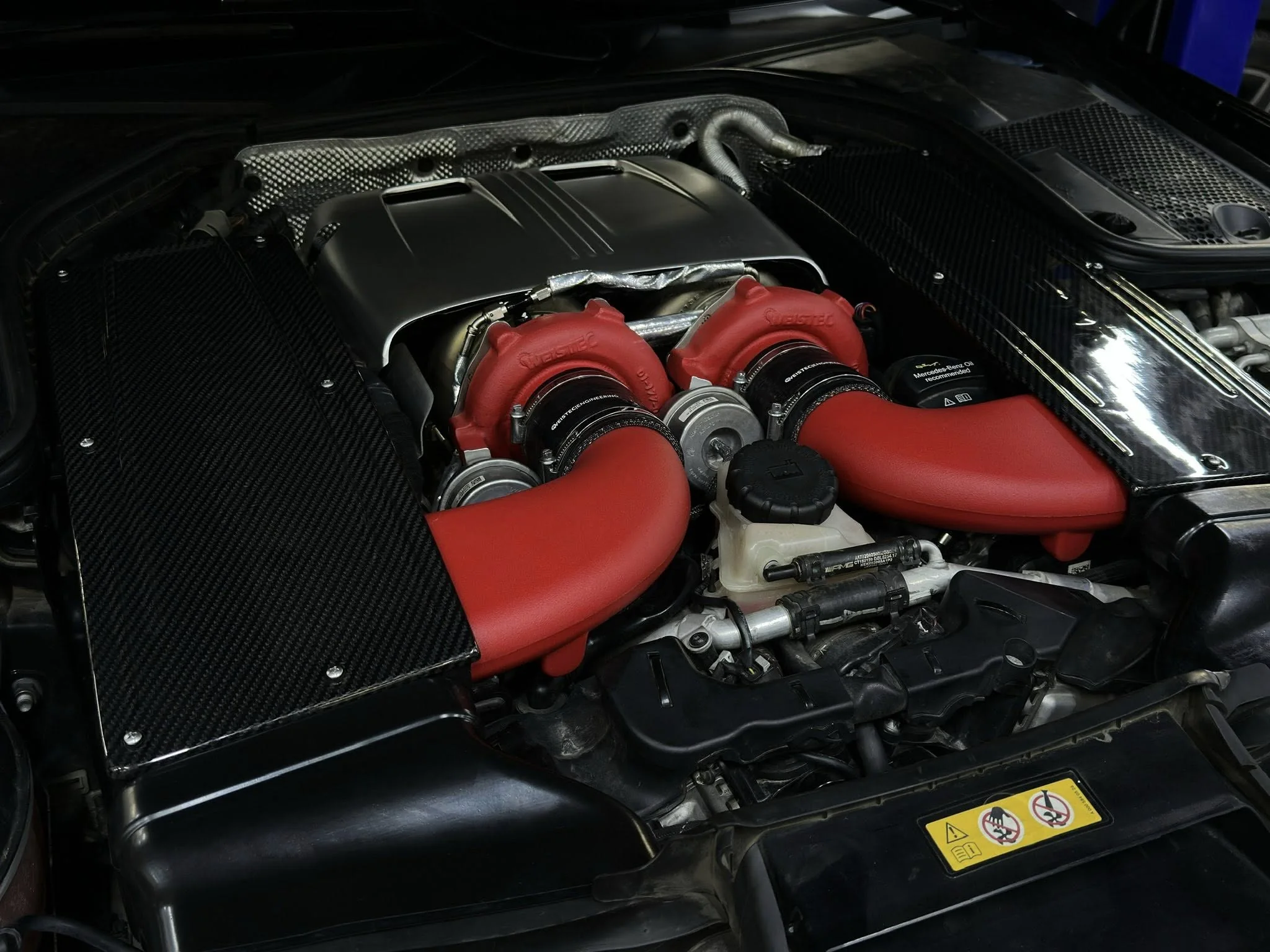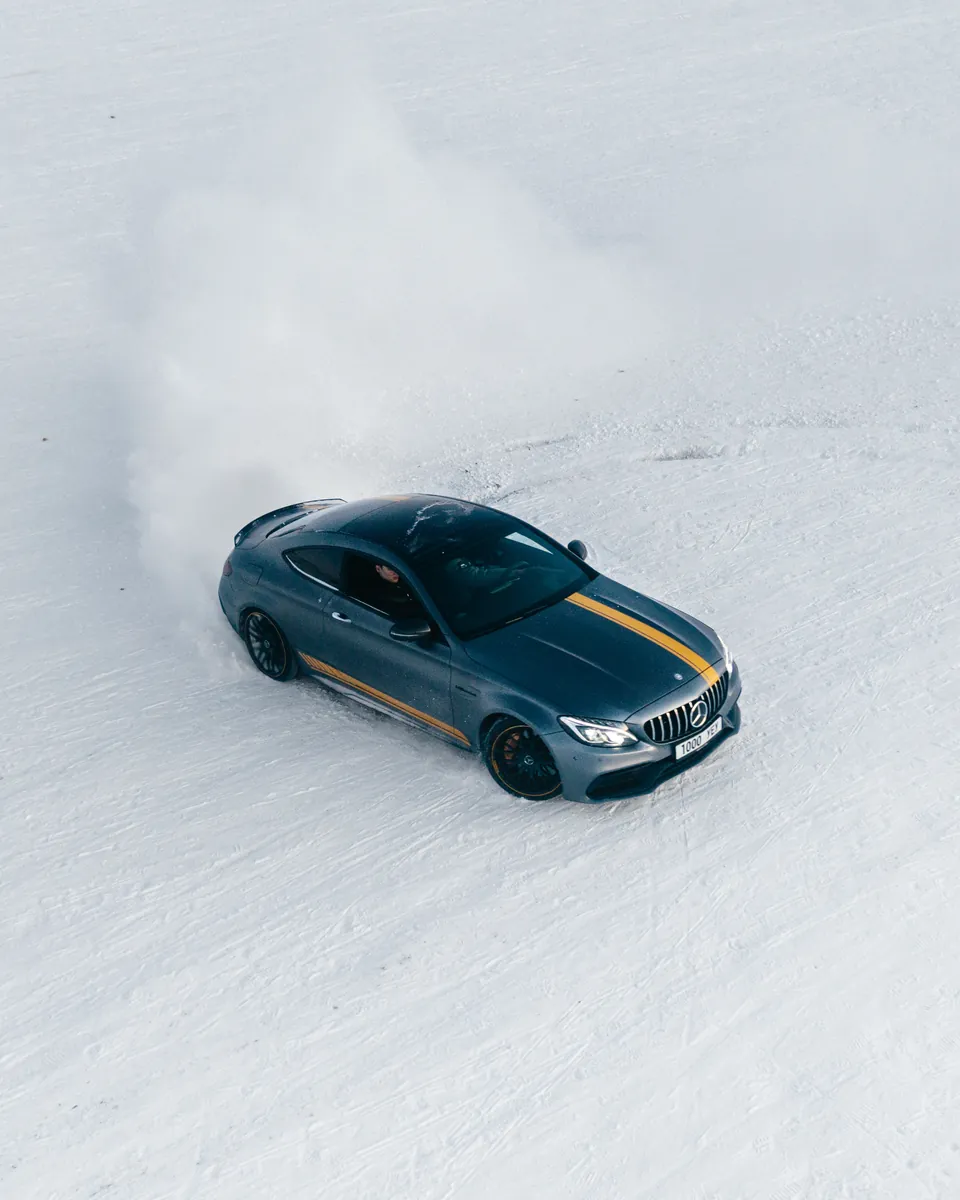

Why the inspection belongs before the first deep freeze
Very low temperature reduces available battery output, thickens lubricants and changes how rubber and suspension components behave. Because one weakness can amplify another, preparation should cover starting, cooling, visibility, tyres and chassis rather than stop at an oil change.
1. Battery and charging system
Resting voltage alone does not prove capacity. A useful check combines a load test, voltage drop during cranking, alternator output and terminal resistance. Vehicles used for frequent short journeys may not restore the charge consumed during cold starts.
2. Coolant protection and leaks
Measure freeze protection and inspect the reservoir, hoses, connections and water-pump area for seepage or crystallised residue. Colour is not a reliable specification, and incompatible fluids should not be mixed. Follow the requirement for the individual vehicle.
3. Tyres, pressure and braking
Mercedes-Benz owner guidance recommends suitable winter tyres and regular tread and pressure checks. Pressure changes as temperature falls, so use the vehicle-specific placard rather than a generic number. Inspect brake discs, pads, wear sensors and fluid at the same visit.
4. Visibility and cabin systems
Check winter washer fluid, wiper blades, demisting, blower operation, seat heating and exterior lighting. Forcing frozen wipers can damage blades and linkages, while a small windscreen chip can spread during rapid temperature change.
Turning inspection into a plan
Plus separates findings into immediate safety work, items to complete before winter and maintenance that can be scheduled later. The owner can address risk first and budget the remainder with clear evidence.